Hyundai i20 is a five-door petrol hatchback that places a wider body and an IVT automatic option within a sub-four-metre length. This article covers the standard i20 family; the turbocharged N Line is not silently mixed into its engine figures.
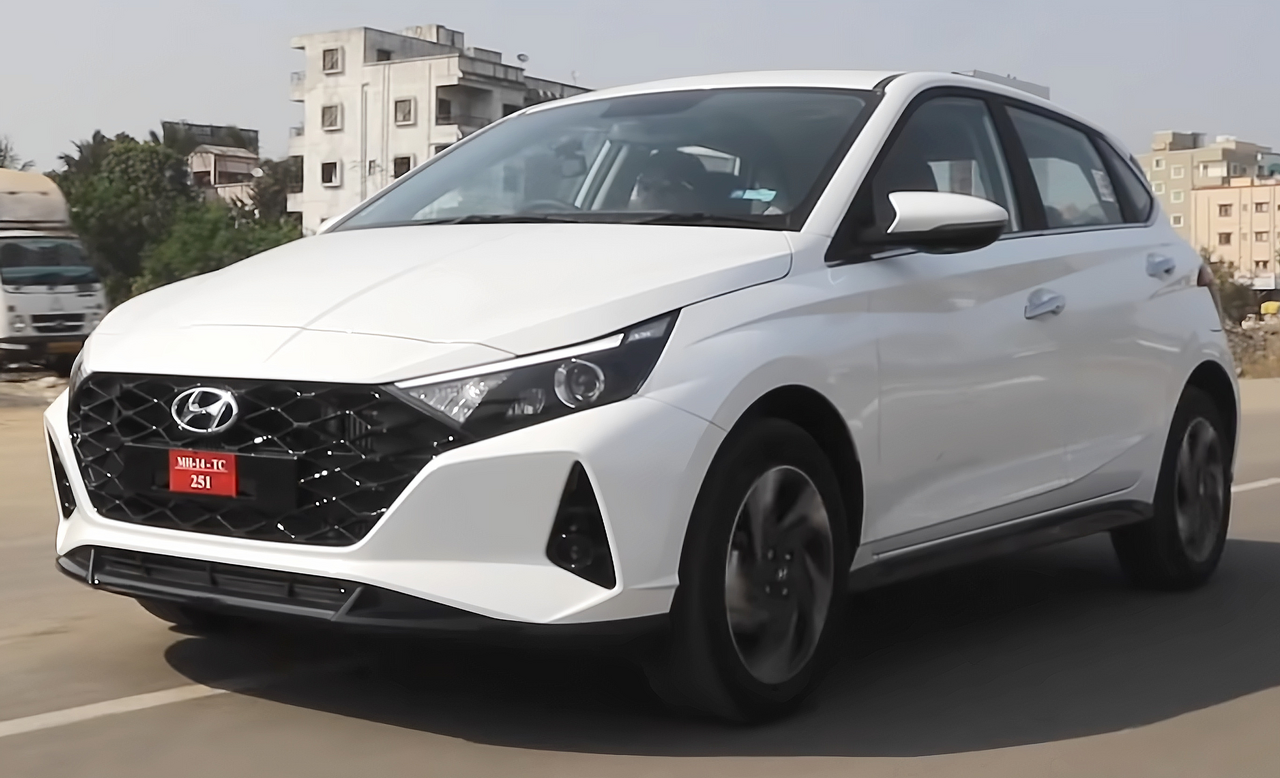

Current manufacturer listing; a new-launch date has not been independently verified for this article.
Technical specifications
What the standard i20 engine offers
The official performance page identifies a 1,197 cc four-cylinder Kappa petrol engine. It gives an output range of 83–88 PS rather than one universal value, making the transmission choice relevant to the specification. Hyundai lists a five-speed manual and IVT. Buyers wanting the ordinary i20 should therefore compare those two driving experiences instead of assuming that every version uses a turbo engine or a dual-clutch gearbox.
A wider hatchback footprint
The i20 measures 3,995 mm in length and 1,775 mm in width, with a published height of 1,505 mm. It is wider than the Nios on the same manufacturer’s dimension tables. That difference is useful when assessing cabin arrangement but also affects narrow garage clearance. Its five-door layout gives rear passengers separate access, while the 37-litre fuel tank is a capacity figure, not a calculated distance between filling stops.
Knight styling and trim decisions
Knight changes the visual presentation through a black cabin, brass-coloured accents and black alloy-wheel styling. It does not by itself establish a different engine. The regular range stretches from Era through higher Asta equipment levels, with several Sportz choices. A buyer should compare the particular safety and convenience items on the chosen trim, because a picture of a Knight cabin cannot confirm the equipment of an entry-level car.
IVT in the commute
An IVT changes the driving experience differently from the manual because the driver no longer operates a clutch pedal. During a demonstration, try the crawling traffic and parking manoeuvres that dominate your commute, then check engine response at ordinary road speeds. The 83–88 PS published spread also means that a specification comparison should identify the gearbox. Do not substitute an i20 N Line test report for this naturally aspirated model’s performance assessment.
Rear access and everyday loading
The five-door body provides separate rear access, but the 1,775 mm exterior width is not a direct measurement of shoulder room inside. Sit in the rear with your regular passengers and test the luggage area with the front seats correctly positioned. Check the reach to the hatch when open, particularly if the car will be used by drivers of different heights. These simple checks connect the published dimensions with the way your household will use the car.
Avoid mixing variant and model prices
The published i20 model range spans different equipment grades and transmissions. A low advertised entry price therefore cannot be assigned to an IVT or a Knight edition without a specific quotation. Ask for a dated price sheet naming the complete derivative, then separate registration, insurance and optional accessories. Compare the extra equipment against your own needs rather than using the total price difference alone as evidence that a higher grade offers better value.
Features and equipment
- Normal and Sport drive modes on applicable versions
- Knight black cabin with brass-coloured details
- Knight 16-inch black alloy wheel styling
Strengths and points to check
Strengths
- Manual and IVT alternatives
Considerations
- Standard range is naturally aspirated; turbo belongs to separate N Line offering
Editorial interpretation of published specifications, not a hands-on road test.
Variants, price and state-wise quotation
Ex-showroom reference; India model index; city not specified · Price source
| Variant / configuration | Price context |
|---|---|
| Era | — Individual trim quote not verified; confirm the engine and gearbox with Hyundai. · ↗ |
| Magna Executive | — Individual trim quote not verified; confirm the engine and gearbox with Hyundai. · ↗ |
| Magna | — Individual trim quote not verified; confirm the engine and gearbox with Hyundai. · ↗ |
| Sportz | — Individual trim quote not verified; confirm the engine and gearbox with Hyundai. · ↗ |
| Sportz(O) | — Individual trim quote not verified; confirm the engine and gearbox with Hyundai. · ↗ |
| Asta | — Individual trim quote not verified; confirm the engine and gearbox with Hyundai. · ↗ |
| Asta(O) | — Individual trim quote not verified; confirm the engine and gearbox with Hyundai. · ↗ |
| Knight | — Individual trim quote not verified; confirm the engine and gearbox with Hyundai. · ↗ |
| Sportz(O) Knight | — Individual trim quote not verified; confirm the engine and gearbox with Hyundai. · ↗ |
State-wise ex-showroom and on-road quotes are not verified for this model. The amount can depend on city, variant, insurance and registration. Select your state in the calculator and enter an itemised local quotation; no automatic tax rate or subsidy is assumed.
Sources and editorial notes
- Hyundai i20 product details ↗
- Hyundai i20 powertrain details ↗
- Hyundai India model and price index ↗
Specifications are manufacturer claims and may differ by trim. Published information can change; confirm the exact vehicle before making a decision.
Information still to verify
- Verified variant-by-variant prices and city on-road quotes
- Licensed model-specific photographs
- Full trim-level equipment and tyre matrix